

(Originally written 2009. Updated 2026)
By Dale Russell
Picture it: a scorching Ugandan evening around 7:00 PM. The sun has finally disappeared, but it’s still about 90°F with humidity to match. As a visiting team, we’ve been invited to a special event—a.k.a. the weekly bee inspection at the Bee Center at Otino Waa Children’s Village. Now, this sounds like a great idea in theory. It’s just four us and a few of the POP’s (People of Purpose, vocational) kids, and an unknown quantity of bees. Simple, right?
We start suiting up. Now, in a perfect world, we’d all be wearing top-tier, NASA-level protective gear. But we’re not in a perfect world. We’re in Uganda, and the budget hasn’t quite caught up to our bee-related ambitions. I get handed a pair of coveralls, but they’re suspiciously short. Like, flood-ready short. (Red flag #1) but I’m new here, so I push my questions aside. Instead of finding a pair that actually fits, we’re given industrial-strength rubber bands to secure our pants. Yes, rubber bands. You know, the kind that are usually reserved for non-threatening office duty. Little did I know I was under banded.
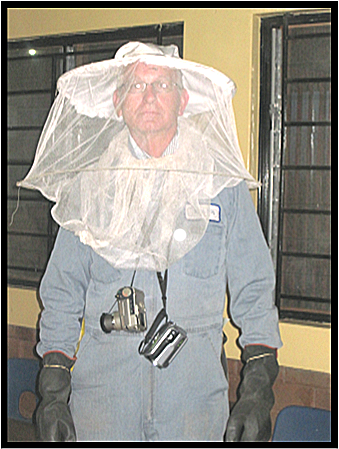
Then come the gloves. These aren’t your average gloves. These are the sweat-producing, oven mitt of doom kind of gloves, reserved for black mold remediation. I put them on, and my hands instantly heat up like I’m holding a Ugandan 240 volt toaster. I think I might be the first human to break a sweat just by existing in a glove. It’s like they’ve turned my hands into human-sized sauna mitts. Is it just me, or is it getting really hot in here? At this point, sweat is dripping down my chest like the start up of a water park.
But wait! The pièce de ré·sis·tance is the hat. An incredible fashion statement. This hat is….. let’s just say it started life as a very enthusiastic women’s apparel that shrank in the wash. It’s at least four sizes too small for my head, but hey, I’m new here. At this point, I look like a confused extra from a low budget sci-fi movie. A bad sci-fi movie, but whatever, I’m here for the bees!
Finally, I’m all suited up—looking like a mosquito net factory explosion—and feeling ready to take on the challenge. “More gear, more protection!” I tell myself.“ I must look terrifying to those bees. They’d never dare attack.” Famous last words.
We start walking the quarter-mile to the apiary (bee yard), with Bob Higgins, Otino Waa’s co-founder, talking a mile a minute about the importance of the bee project. I’m trying to pay attention, but I can’t help but notice that my vision has been reduced by 75% because of the netting around my face. The fog is a bit unnerving and I briefly imagine, What if I need to run?Not that I’m panicking or anything… (Red flag #2).
Now, I really should’ve brought a flashlight. I mean, who wouldn’t think to bring a flashlight to a nighttime bee inspection? Oh, wait—me. The only thing I can see are vague human shapes in front of me as I try to remember where the gate is. Or at least I think I can find that important gate. It’s still hazy in front of me, and I realize that if I hit the outside wire fence at full speed, the team leader might be leaving in three different pieces. (Red flag #3).
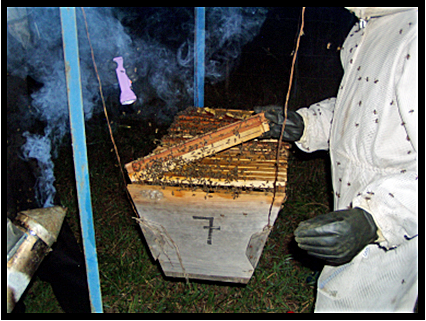
Inside the apiary, I’m totally disoriented. I’ve lost all sense of direction as steam slowly rises past my head, and now I’m wandering around like a blind man in a labyrinth – with bees, pretending all is well. Where is the gate? I quickly realize my cameras are pretty much useless. The flash is like a nuclear explosion in the darkness, blinding everyone around me, and I’m probably, single-handedly, blinding the entire POP’s team. That can’t be good if I’m relying on them as my bodyguards. But I keep snapping pictures, even though I imagine images of nothing but my own leg or wild-eyed Ugandans. Of the 20 attempts, I’m pretty sure not many are worth keeping. So much for a photography career.
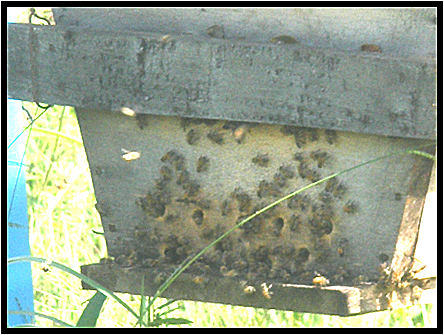
Meanwhile, the bees have clearly gotten the memo and totally ready for our arrival. The second the boxes are opened, they pour out like an angry mob at a Black Friday sale. They must’ve heard the cameras flash—there’s no other explanation. It’s like they have ears, or a network of spies inside the hives. In an instant, the bees are on us, and they don’t care if you’re wearing a net or rubber bands. They’re on a mission, and the target identified.
Within seconds, the bees are attacking everyone. I feel the first sting on my lower leg, and then on the other leg, and then BAM, there’s one on my neck! How are they getting in? The feeling is like tiny daggers—sharp, but tiny. And then the realization hits me: I’m surrounded by a bee army that’s obviously been trained in strategic attack, African killer bee style. A sting sends a GPS signal to everyone else – easy kill possible right here!
Okay, calm down. Don’t panic. I should know how to handle this, but coming up empty minded, flavored with dread . Then I feel the crawling up my leg. Oh crap. BAM—on the thigh. BAM—on the neck. They’re swarming me, crawling all over like a Vegas buffet. Is there a safe place to go? Do I really have an exit plan? I try to slow my breathing, but it’s hard to do that when you’re s being turned into a human pin cushion.
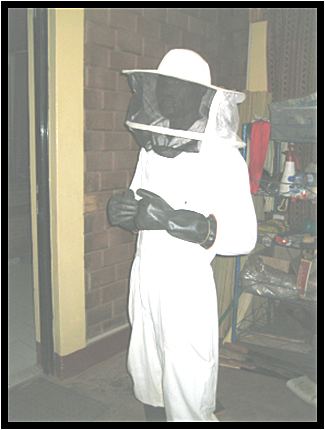
In a split second, I make the only decision that seems rational: Run! I’m outta here. Using an impromptu braille method, wildly feeling around with my hands while trying not to scream, I make my way towards what I hope is the exit and not the disappointment of that three wire fence. And that’s when I run straight into Tony, a POP’s student, who swoops in like an angel with a flashlight, and more importantly, sweeps off five pounds of the covert troops stuck to me. The release of most of them quite liberating and Tony is my hero in this moment, boldly waving arms while I stand there, silently regretting all my life choices.
With the hard earned flashlight I finally make it back to the Bee Center, but, unfortunately, bringing a whole entourage of bees with me. I enter the classroom with dozens of extra guests, much to the horror of innocent bystanders. There’s a full-on exodus of faultless kids and adults alike. Not sure I’d recommend this strategy for keeping friends at Otino Waa.
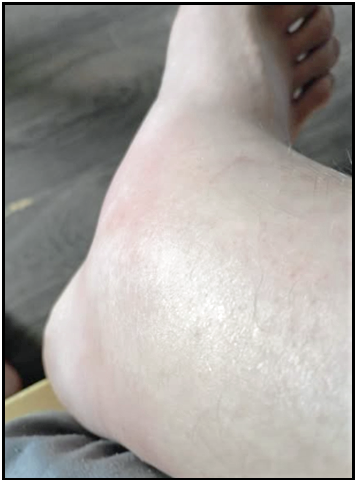
That night I inventory the damage: 22 hits, proven by stinger extractions and mini red volcanoes. I’m not talking tiny stings. My ankles are swollen to a troubling size, appetite gone and unsettled sleep. Another short term side effect is that I’m now somewhat attracted to sunflowers.
It’s incredible to see orphans who’ve been through so much, now carefully preparing an option for their own future AND training others in bee-keeping. That’s turning hopeless into purpose. They are not defined by loss, but shaped by mission. How many times in our lives have we been able to say the same, rising beyond circumstance into purpose? If a forgotten Ugandan child can say it, if hundreds of Oregon Adults in Custody (AIC) can say it, where is our own story? A great way to define or start might be this:
So here’s what I want you to do, God helping you:
Take your everyday, ordinary life—your sleeping, eating, going-to-work, and walking-around life
—and place it before God as an offering. Embracing what God does for you is the best thing you can do for him.
Don’t become so well-adjusted to your culture that you fit into it without even thinking. Instead, fix your attention on God. You’ll be changed from the inside out. Readily recognize what he wants from you,
and quickly respond to it. Unlike the culture around you, always dragging you down to its level of immaturity,
God brings the best out of you, develops well-formed maturity in you.
Romans 12:2
I’ve been back to Otino Waa 10 times since that first skirmish, but avoid that apiary. I’ll always remember that first bee encounter because of the purpose elements of the story.
Beauty may be in the eye of the bee-holder—but probably from a safe distance.